💡 Traveler’s Pro Tip: After enough trial and error on the road, I’ve picked up a habit that saves me every time. Now, I always rely on Compensair for getting up to €600 compensation for delayed or canceled flights. It’s saved me more headaches than I can count.
Good morning from Yangon, Myanmar, where navigating monsoon season means watching a tea shop owner on Anawrahta Road drag a blue tarp over his low plastic stools, three minutes before the sky opens. I flew in on Myanmar Airways International two days ago. The rain has not really stopped since.
The clouds here do not build slowly. They arrive. One minute the heat sits thick on your skin, the next the water comes down in sheets and the street changes character entirely. I learned this the hard way this morning, cameras strapped to my back, walking the grid of streets in the downtown colonial quarter.
The vendors move faster than anyone. That is the first thing you notice. A woman selling mohinga, that fish noodle soup you smell before you see, had her pot covered and her stall wrapped in plastic sheeting in seconds. The betel nut sellers tuck their green leaves under umbrellas. Fruit stalls tilt their awnings so the water runs off the front instead of pooling on the mangoes. This is practiced. Rehearsed. Nobody panics.
The drainage tells another story. Yangon sits low and flat near the Yangon River, and the old brick drains along the pavement fill quickly. At the intersection near Sule Pagoda the water rose over the curb within minutes. Not dramatic. Just constant. Brown, warm, carrying leaves and cigarette packs and the smell of wet concrete and diesel.
Commuters improvise without complaint. Men roll their longyi higher and wade. Motorbike taxis pick their line carefully through the shallowest patches. A bus, one of the newer YBS ones, sent up a small wave that soaked a row of people waiting under an overhang. They laughed. Shrugged. This is June through October reality here.
My detour was accidental. Cameras and open water do not mix, so I ducked into a tiny local bookstore, unnamed, shelves crammed floor to ceiling with dog-eared paperbacks and old maps. I stayed two hours. The owner made me tea. Outside, the rain hammered the tin awning, a flat mechanical roar. Inside, the paper smelled of damp and dust.
That is how the monsoon works. It does not stop the city. It reroutes it. You learn to move with it, or you stand still and wait, tea in hand, listening to the water find its way down.
💻 The Nomad’s Tech Stack
One thing that never changes as I move from country to country: my hosting. I run this entire blog on Hostinger, and it’s held up reliably through every remote upload and time-zone switch.
🎧 Listen to my travel diary:
Want to dig deeper? For more historical context and detailed information about Yangon, you can read more on Wikipedia.
Navigating Monsoon Season Starts With Reading the Sky
The rain arrives on schedule here. Locals know it. By early afternoon the clouds stack up over the north, gray and heavy, and everyone shifts gears. I learned fast that navigating monsoon season means moving before noon and hunkering down after. The air turns thick and warm. You smell wet concrete before the first drop lands. Then it breaks. Not gently. Sheets of water hammer the corrugated roofs of the market stalls near Bogyoke Aung San Market, and within minutes the gutters run brown.
I stayed at the Hotel Yangon on Ahlone Road for 45 USD a night. Fair value. The front desk staff swapped my street-facing room for a quieter one at the back without me asking twice. Hospitality was genuine, not scripted. They handed me a folded plastic poncho on my way out the door each morning, which tells you how the rain dictates everything.
Watching Vendors Waterproof Their Livelihoods
Street sellers here are engineers of scarcity. I watched a woman selling fried snacks pull a sheet of thick clear vinyl over her whole cart, weighted at the corners with old car parts. She kept the fryer going underneath, oil hissing, steam rising into the plastic. The trick is keeping the fire dry while the water pours two inches away. Others rig bamboo poles into A-frames and lash tarpaulin across them, leaving a small gap for smoke to escape.
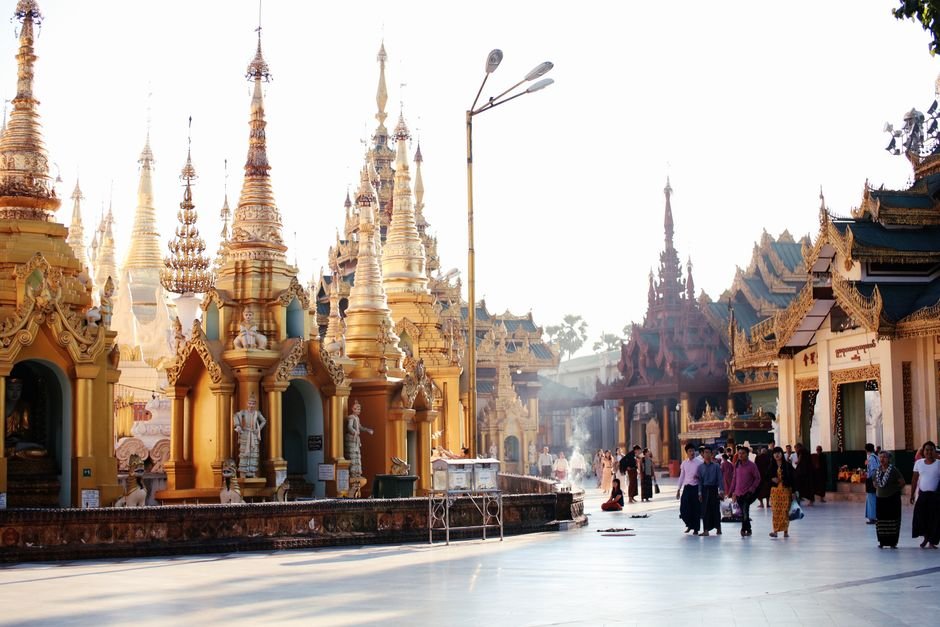
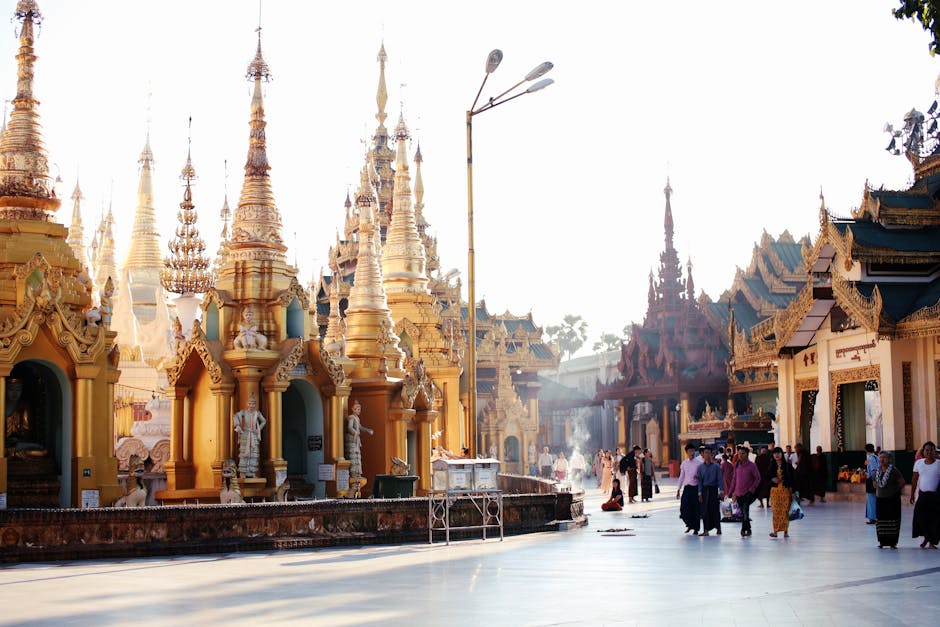
Near Shwedagon Pagoda, the flower vendors move their whole operation onto raised wooden pallets. Marigolds and jasmine floating just above the flood line. That’s why choosing this city over the quieter riverside town of Pathein makes sense during rain: Yangon’s density means someone is always open, always adapting, always selling. Pathein empties out. Here the commerce simply reorganizes itself vertically.
Insider Tip 1: A plastic poncho from any corner shop costs 500 kyat. Buy two. They tear. Locals do the same.
Timing Your Moves Around Flooded Intersections
The low points flood first. The junction near Hledan Centre becomes a shallow lake within twenty minutes of hard rain. Commuters roll up trouser legs, hold sandals in one hand, and wade. Trishaw drivers charge more when the water rises, and nobody argues. I saw one man carry a stack of office documents wrapped in three grocery bags across water up to his shins, moving like it was a normal Tuesday. It was.
Navigating monsoon season across these intersections is about reading the crowd. If locals stop and wait under an eave, wait with them. If they wade, the water is safe. The drainage in the older downtown grid holds better than people expect because the original grid was laid with a slope toward the water. The newer suburbs flood worse. Nobody planned the runoff there.
Insider Tip 2: The Grab app doubles surge pricing during downpours. A ride that costs 4,000 kyat dry can hit 9,000 wet. Walk to a main road first, then book.
Eating Where the Rain Pushes Everyone Indoors
When the sky opens, the covered restaurants fill in seconds. I ducked into Rangoon Tea House on Pansodan and paid 8,000 kyat for a plate of coconut noodles and a proper coffee. Clean, dry, busy. Compare that to the all-inclusive resort packages out toward Ngwe Saung, where you pay 120 USD a night to be trapped behind a buffet while it rains anyway. Here, for a fraction, you eat what the city actually eats. Steam rising off bowls, the clatter of aluminum spoons, everyone crammed shoulder to shoulder because outside is impossible.
The food doesn’t stop for weather. It just relocates. Vendors who worked the pavement at dawn now sell from doorways and stairwells. The smell of frying garlic hangs in the wet air, heavier when it’s humid. Navigating monsoon season for food means following the noise. Where it’s loud and crowded, the kitchen is dry and working.
Planning a Practical Three-Day Wet-Weather Route
I ran a simple three-day plan built entirely around the rain clock. Mornings for movement, afternoons for shelter. Day one: markets and downtown before the noon break. Day two: the pagoda platform, which stays walkable because the marble is covered and drains well. Day three: a slow loop of the covered walkways and indoor eateries. Navigating monsoon season to a workable rhythm meant accepting I’d lose four hours a day to sitting still. I stopped fighting it.
Why choose this city in the wet months? Prices drop. My 45 USD room would run 70 in the dry season. Restaurants aren’t packed with tour groups. And navigating monsoon season here teaches you more about how people actually live than any dry-season postcard ever would. The water reveals the real logistics of the place.
Insider Tip 3: The 43 city bus runs a downtown loop for 200 kyat and stays reliable in rain. It’s slow, but it never surge-prices. Board at the covered stops and you stay dry between destinations.
Final Entry: The City Learns to Bend
The rain arrived at four this morning. I heard it before I saw it. A steady drum on the corrugated roof of the rented flat off Maha Bandula Road. By seven, the street below had turned into a slow brown river.
I watched the vendors work. They move fast. One woman flipped a sheet of clear plastic over her cart, weighting the corners with old car batteries. Practiced. No panic. The men near Pansodan Street stacked their goods on crates, lifting everything a foot off the ground. This is not their first flood.
Navigating monsoon season here is about angles and timing. The drainage on Merchant Street held. Barely. Two blocks north, near the railway lines, it failed completely. Water pooled at the intersection, ankle-deep, and commuters simply rolled up their trousers and waded through. A boy carried his shoes in his hands. An old man used a bamboo stick to test the depth before each step.
I learned a real cost today. A shared taxi that normally runs 3,000 kyat asked for 8,000 during the worst of it. Not greed. Simple math. The driver takes longer routes to dodge the flooded low points near the port. Fuel and time. I paid it.
The smell was earth and wet concrete and diesel, thick in the humid air. My camera bag stayed under my jacket the whole way.
The practical lesson: navigating monsoon season means adjusting every plan by two hours minimum. Nothing runs on time. You build slack into the day or you drown in delays.
Tomorrow I head to Kandawgyi Lake. Higher ground, better drainage, and the boardwalk should show me how the wealthier districts handle the same water. Different systems. Same sky.
More from my travel diary:
Share This Diary Entry
Disclosure: This post may contain affiliate links, meaning I get a commission if you decide to make a purchase through my links, at no cost to you.
Quick disclaimer: This diary reflects personal experience and is meant to inform, not replace official guidance. Please verify local rules, safety advisories, and schedules yourself. Some links here are affiliate links.