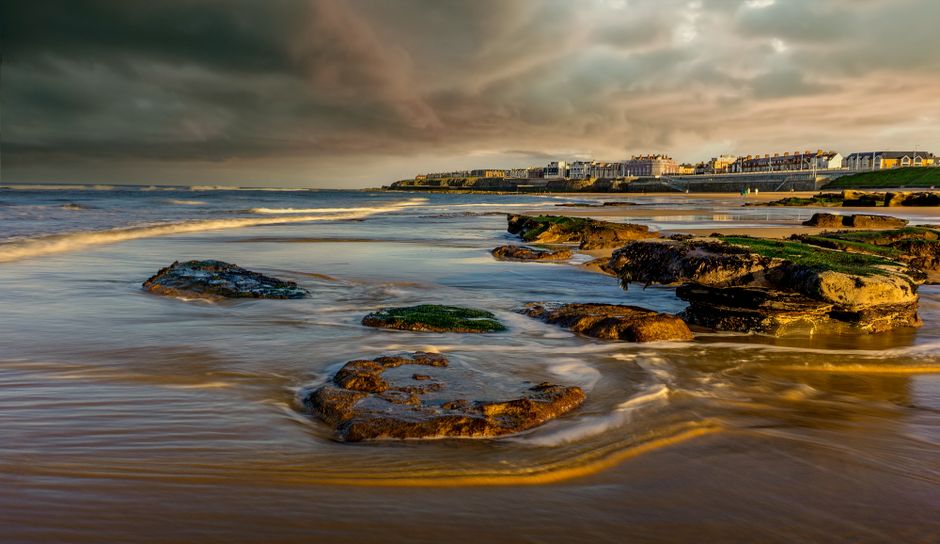
Good morning from Lahinch, Ireland, where budget road trips along this stretch of the Atlantic start with a simple observation: the salt gets into everything. I’m standing at the seafront promenade, and the metal railing under my hand is pitted. Rust bleeds through the grey paint. Someone repainted it recently, but the corrosion pushes back within a season. That’s the reality here. The ocean wins.
I arrived on Bus Éireann. Not the smooth trip I planned. The main line was under maintenance. The driver rerouted through the back roads and outer estates, past bungalows and grazing fields, before finally dropping into town. Confusing at first. Then useful. You see how people actually live out here, away from the surf shops and the golf crowd.
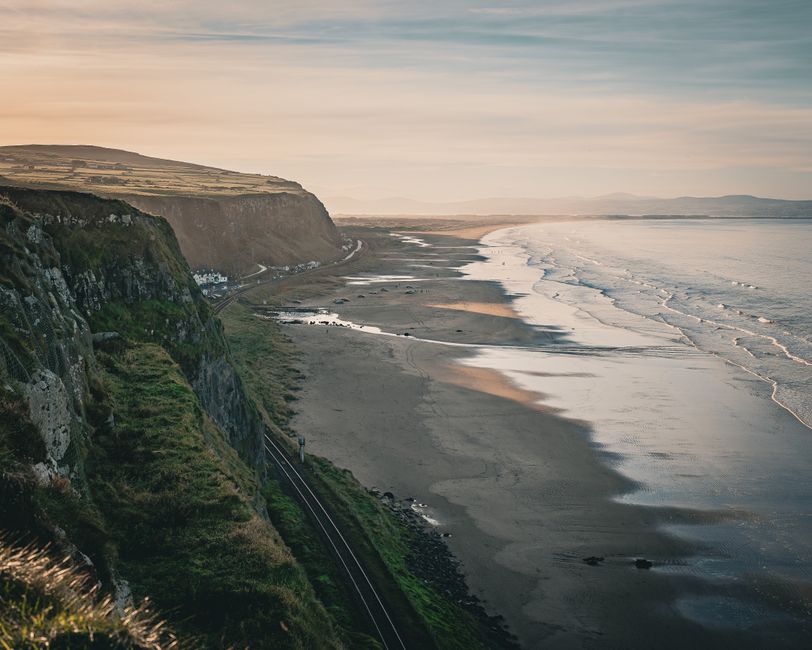
The coastal road itself is a lesson in practical engineering. Narrow. Built to hug the land rather than fight it. The guardrails are the honest part. They’re eaten from below, brackets flaking, bolts stained orange from years of sea spray driven inland by the wind. The county keeps patching them. The Atlantic keeps chewing. It’s a slow, ongoing negotiation between concrete and weather.
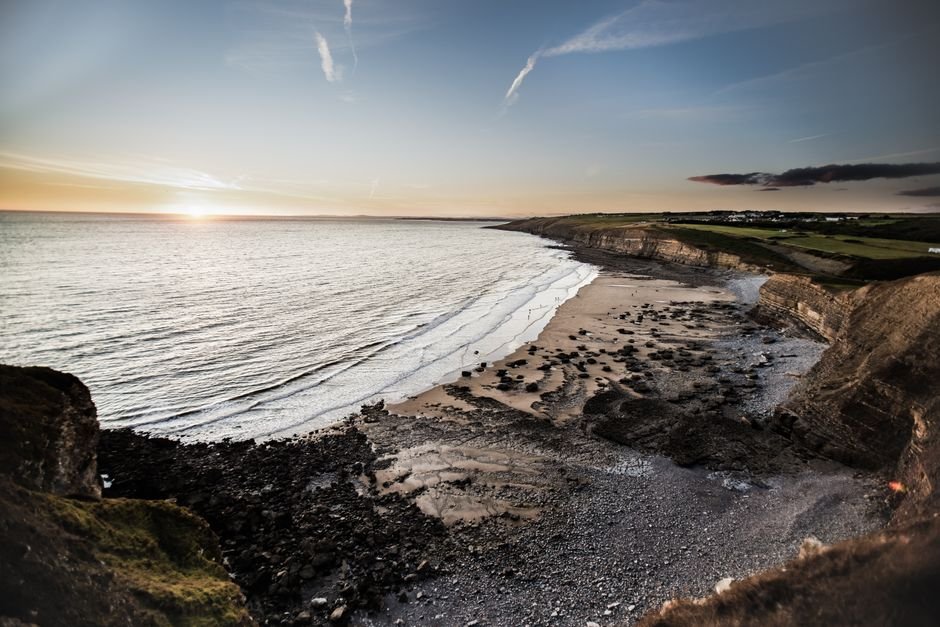
Lahinch sits on Liscannor Bay. This was never a rich town. The economy ran on fishing and, later, on people coming to swim and surf the beach break. The wide sandy strand is the reason the place exists as a destination at all. Before the surfers, before the tourists, small boats worked these waters. You can still read the fishing history in the way the town faces the sea, all its energy pointed at the bay.
The wind here is constant and it carries the smell of kelp and diesel and wet stone. My jacket is already damp from a passing squall that lasted maybe four minutes. That’s the pattern. Sun, then rain, then sun. You stop checking the forecast. You just keep a hood ready.
This is a working coast, not a postcard. The buildings are low and solid because they have to be. The roads bend because straightening them would cost money nobody wanted to spend. For a traveller moving on a tight budget, that lack of polish is the appeal. Nothing here is dressed up for you. It just is what it is, weathered and functional, holding its ground against the water.
💡 Traveler’s Pro Tip: If there’s one thing constant travel has taught me, it’s this. Now, I always rely on Qeeq for booking rental cars with price drop protectors. It makes the whole logistics side of traveling far less stressful.
💻 The Nomad’s Tech Stack
People often ask what keeps this site running smoothly no matter where I am in the world. I rely on Hostinger for hosting. It’s stayed rock-solid even when I’m uploading heavy media files from questionable hotel wifi.
Planning Budget Road Trips Through Lahinch’s Backbone
I mapped this out cheap. Three days, one rented Skoda Fabia from Enterprise in Ennis at €38 a day, full tank €62. Lahinch was the anchor. The town sits small and tight, built around a single main street where every second door is a shop or a pub. My plan was simple: drive the loop, sleep in Lahinch, eat local, skip the packaged nonsense. Budget road trips work when you refuse the all-inclusive trap and treat the car as your only fixed cost. The steering wheel felt warm from the low afternoon sun as I pulled off the N85, the smell of cut hedgerows drifting through a cracked window.
Driving The Weathered Engineering Around Doolin
Doolin lies north of Lahinch. The route climbs and dips hard. Roads here were widened over decades but still pinch to single lanes near the older stone walls. Concrete patches sit over cracked asphalt, and the camber tilts you inland to shed rainwater. You feel every seam through the tyres. Locals drive fast and know the blind bends by memory, which is unnerving when you meet a milk truck at a passing point where two centuries-old field boundaries force the tarmac into a tight throat lined with lichen and loose gravel that pings against the wheel arches.
Insider Tip 1: The 350 local route connects Doolin, Ennistymon and Lahinch. A single ticket runs about €4.50. Cheaper than parking fines in Doolin during high season, which climb to €150.
Comparing Lahinch Value Against Popular Rivals
Everyone pushes Doolin for its music and ferry access. Fine. But it’s overrun and prices reflect that. Lahinch gives you the same access to the wider region at lower cost. That’s why choose this over the crowd: a mid-range room in Doolin runs €140 to €180 in summer, while Lahinch keeps options near €90. The math is plain. Budget road trips reward the traveler who bases somewhere slightly less famous and drives to the attractions instead of paying the premium to sleep beside them. Ennistymon, just inland, is quieter still, with its stepped cascades on the River Inagh roaring after rain.
Insider Tip 2: Fuel is cheaper in Ennistymon than Lahinch by roughly 4 cents a litre. Fill up before the coast loop.
Booking Real Accommodation Without Overpaying
I stayed at the Atlantic Hotel on Main Street. €95 a night, room only, breakfast €12 extra which I skipped. The building is old, floorboards that announce every step, radiators that clank. Staff were direct and helpful. When my key card died at 11pm, the night manager fixed it in two minutes without fuss and pointed me to a late chip shop still frying. That’s real hospitality, not scripted. Compare that to the half-board resort packages further along the region charging €210 with a buffet that closes at 8:30 sharp. For budget road trips, the independent hotel wins on flexibility alone.
The room smelled faintly of old paint and sea air pushing under the sash window. I could hear the street below until midnight.
Eating Local Instead Of Buffet Packages
Skip the fixed-menu hotel dinners. Lahinch feeds you better on the street. I ate at Kenny’s Bar, a bowl of seafood chowder for €8.50, thick with potato and dense with fish, bread still warm. The place hums with locals arguing about hurling. Half-board packages nearby charge €35 for a three-course dinner you’ll forget. My chowder cost a quarter of that and tasted of the actual harbor. This is where budget road trips prove themselves: the cheap plate is often the honest one. Steam rose off the bowl while rain started drumming the window, everyone shifting closer to the fire without a word.
Insider Tip 3: The Cliffs of Moher visitor centre charges €12 online, €15 at the gate. Book ahead and go before 9am to dodge the coach fleet.
Tracing The Fishing History Of Ennistymon
Ennistymon sits inland but its story ran on water. The Falls powered mills that processed the catch and grain brought up from the smaller landing points nearby. The old market house still stands, its stonework worn smooth by generations of hands. Traders once auctioned fish here before it moved to Ennis. Walking the main street you see faded hand-painted shopfronts, names like Nagle and Byrnes still legible under newer coats. The river below the bridge churns brown and fast after weather, the noise filling the whole square, drowning conversation as it drops over the ancient stepped rock. Budget road trips let you stop in towns like this that the packages drive straight past. Park free, walk ten minutes, learn more than any resort brochure teaches. Then get back in the car and keep moving.
Final Entry: The Weathered Edge
The car pushed north out of town this morning. Cold air. Flat light. The road narrowed fast, hugging contours that no engineer would design today. These lanes were cut by hand, following the land instead of flattening it. You feel every rise in your spine.
The barriers along the drops tell the real story. Salt eats them alive. What was once solid steel now flakes and pits, the protective coating long gone, leaving a rough orange skin that crumbles under your thumb if you press it. Nobody replaces them quickly here. The maintenance budget stretches thin against a coast that never stops chewing.
I stopped at a small harbor settlement, one of the working spots that fed families for generations. Stone slipways worn smooth. Old iron rings still bolted to the quay wall, once used to tie vessels that hauled in whatever the water gave. The fishing dried up years back. Now the harbor holds a handful of pleasure craft and a lot of silence.
Here is the hidden cost I learned today. Fuel. The distances between towns look tiny on a map, but the constant climbing and braking on these coastal lanes burns diesel far faster than any motorway. I budgeted for kilometers, not for gradient. My tank emptied at nearly double the rate I expected. That is the reality of budget road trips out here that nobody warns you about.
Practical takeaway: fill up in the larger town before you head out. Rural pumps charge a premium and half of them close early.
Budget road trips reward patience over speed. Tomorrow I head toward the golf links district on the town’s western edge, walking the dune paths on foot to save the fuel I clearly underestimated today.
🎧 Listen to my travel diary:
Curious for more? There’s a lot more background and detail on Lahinch available on Wikipedia if you want the full picture.
More from my travel diary:
Share This Diary Entry
Disclosure: This post may contain affiliate links, meaning I get a commission if you decide to make a purchase through my links, at no cost to you.
Heads up: These entries are shared for entertainment and general information. Always double-check current local regulations, advisories, and transport timetables before you travel. This page may include affiliate links.