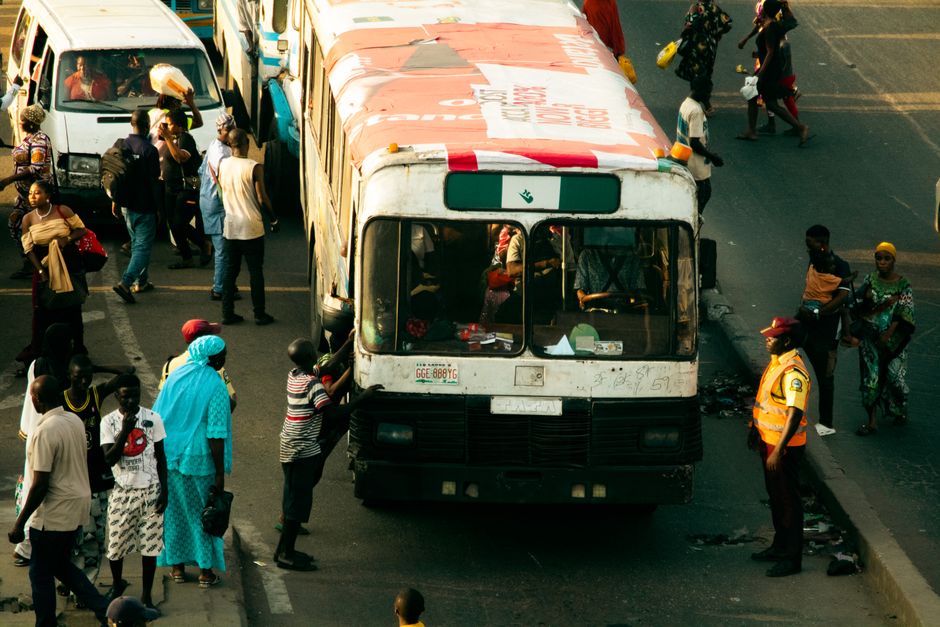
For further reading: I’d recommend checking out Wikipedia’s page on Lagos for deeper historical and factual context.
Airport taxi scams start before you even clear the doors at Murtala Muhammed International, and I watched the whole choreography unfold while standing under the arrivals canopy, my heavy camera bag pressed against my leg. My Turkish Airlines flight landed just after the rain broke. Right now I’m looking at a man in a bright yellow reflective vest, a laminated ID lanyard swinging from his neck. It says “Airport Official Transport.” It says nothing of the sort in reality. He’s already scanning faces, reading the confusion, picking targets.
Here’s the mechanics. The lanyard is the first hook. It looks bureaucratic. It looks vetted. It isn’t. Anyone can print one at a shop in Oshodi for a few hundred naira. The vest matches the lanyard. Uniformity reads as legitimacy to a brain that just crossed six time zones.
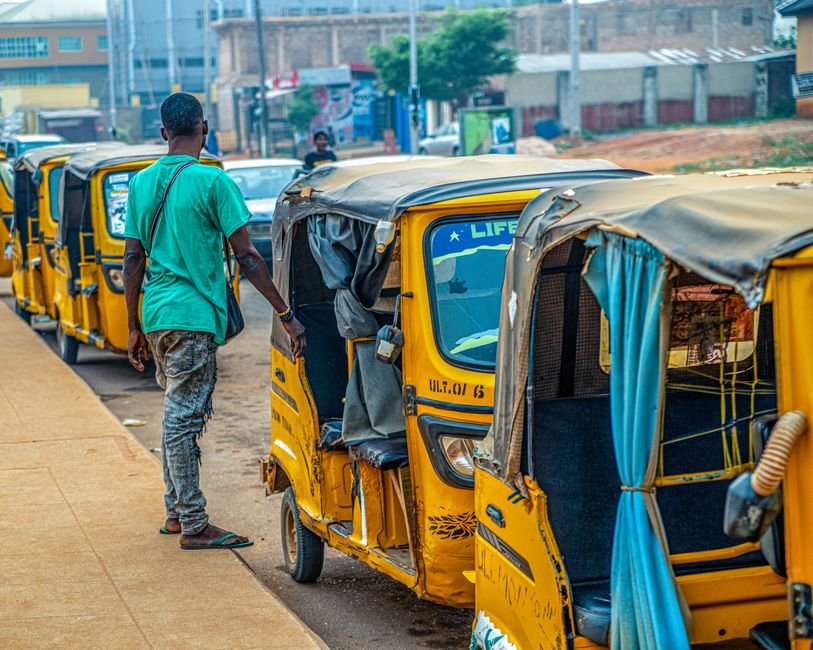
Then comes the handoff. The lanyard man doesn’t drive. He never drives. He walks you toward the car park, chatting, friendly, asking about your trip. At the edge of the lot he says the line: “My brother will take you.” The brother has no ID. No vest. Just a car with a cracked windscreen and no visible plate on the front.
Next, the meter. There is no meter. There was never a meter. But when you ask about price, he’ll gesture at a dead dashboard and say the meter is broken, so we agree now. The number he says is four times fair.
The cruelest part is the ride-share zone. Bolt and Uber both operate here. But the official pickup point is deliberately obscured, tucked behind construction barriers and orange netting near the far end of the terminal frontage. The touts know exactly where it is. They stand between you and it.
I learned this the slow way. The downpour caught me hard, warm fat drops hammering the tin roofing, the smell of wet asphalt and diesel thick in the air. I ducked into a tiny unnamed bookstore two hours, shelves crammed with dog-eared Achebe paperbacks and old Lagos maps. The owner, a quiet older man, sketched me the real layout of the airport approach on a receipt. Where the barriers were. Where the honest cars waited.
So this entry is about walking. About reading the vest, ignoring the brother, and finding the netting yourself.
💡 Traveler’s Pro Tip: If there’s one thing constant travel has taught me, it’s this. Now, I always rely on Tiqets for skipping the massive lines at top museums and attractions. It eliminates so much unnecessary stress when you’re on the road.
💻 The Nomad’s Tech Stack
A question I get a lot: how does this blog stay online while I’m bouncing between time zones? The answer is Hostinger. It’s fast, dependable, and never lets me down even when I’m syncing huge photo batches from the middle of nowhere.
🎧 Listen to my travel diary:
Spotting Airport Taxi Scams the Moment You Clear Customs
Murtala Muhammed International Airport hits you before you even reach the doors. The air conditioning fails around the baggage carousel. Heat pushes in. You smell jet fuel mixed with the plastic wrap peeling off suitcases.
Then the lanyards appear. Men wearing laminated ID cards that look official. They aren’t. The airport taxi scams here start with those badges. Anyone can print a lanyard. Real airport staff wear specific uniforms and stay behind counters. These guys drift through the crowd, reading your face, watching where your eyes land.
One approached me the second I gripped my backpack tighter. “Taxi, sir? Very safe.” He flashed the card too fast for me to read it. That speed is the tell. Legitimate operators let you inspect. Scammers rush you.
I kept walking. First rule of surviving airport taxi scams: never stop moving until you decide where you’re going.
Decoding the ‘My Brother Will Drive You’ Handoff
The handoff is the cleverest trick. A man quotes you a price at the terminal door. You agree. Then he walks you outside and says his car is being serviced. “My brother will drive you. Same price.” Except the brother never agreed to anything.
Once you’re in that unmarked car, the negotiated price evaporates. The driver claims he knows nothing about the deal. You’re now on the Airport Road with your bags in a trunk you can’t open.
The broken meter excuse follows the same logic. There are no functional meters in most of these cars. “Meter is spoiled today” means the price is whatever they decide when you arrive in Ikeja or Victoria Island. I heard one traveler quoted 40,000 naira for a ride that should cost 8,000.
Insider Tip 1: Book Uber or Bolt before you exit. A Bolt from the airport to Victoria Island runs roughly 9,000 to 14,000 naira depending on traffic. Confirmed price. No brother involved.
Compare this to Cotonou’s smaller airport nearby. Fewer touts, but almost no ride-share coverage, so you’re stuck bargaining anyway. Lagos wins on value once you crack the system: you get regulated app pricing that Cotonou simply can’t match at scale.
Finding the Ride-Share Zone Hidden Behind the Barriers
Here’s what nobody warns you about. The official ride-share pickup zone sits behind construction hoarding. Deliberately awkward. You walk out expecting a clear lane and instead face metal barriers and a stretch of broken pavement. The touts count on this confusion. If you can’t find your driver, you’ll take their car out of frustration.
Your Bolt driver will call. He’ll say “come to the second gate” or “walk past the barrier.” Trust that. Walk toward the noise of car horns and the diesel smell of idling engines. The zone is past the domestic terminal side.
Insider Tip 2: Buy a local SIM inside arrivals before you leave the building. An MTN or Airtel SIM with 2GB costs about 2,000 naira. Without data, your ride app is useless and airport taxi scams become almost impossible to avoid.
I planned a simple 3-day budget route: two nights near the airport corridor, one night on Lagos Island for the markets and the waterfront. Nothing fancy. Just enough to test whether a solo traveler could dodge every trap on foot and by app.
Walk the pedestrian route only in daylight. The stretch toward the Local Airport Road has proper foot traffic and food vendors selling suya, the smoke of grilled meat cutting through the humidity. Sharp pepper and roasted onion. Cheap, hot, honest.
Choosing Real Accommodation Over Airport Chaos
I stayed at the Airport Hotel Ikeja for 55,000 naira per night. Reasonable for the area. The front desk called my Bolt directly and confirmed the plate number, which is exactly the service you want after dodging airport taxi scams all afternoon. The receptionist wrote the driver’s name on a slip and told me not to enter any car that didn’t match. That practical hospitality mattered more than any pool.
Contrast this with the all-inclusive resorts pushing 200,000 naira a night on the Lekki side. You pay for a buffet you barely eat and a shuttle that still hands you to unvetted drivers. The cheaper hotel gave me sharper protection.
Why choose Lagos over the quieter regional alternatives? Raw numbers. Ride-share saturation means transparent pricing. Multiple SIM providers mean cheap data everywhere. And places like the National Museum Lagos and the waterfront near Tafawa Balewa Square sit within affordable app-ride distance.
Insider Tip 3: Avoid the airport between 4pm and 7pm. Traffic doubles your fare and doubles your exposure to airport taxi scams while you wait in the pickup zone. Land midday if you can control your flight time.
Survive the arrivals hall. Everything after that is easy.
Outro: What the Scams Actually Cost You
The mechanics are cleaner than you’d think. It starts before you clear the doors. A man in a pressed shirt, plastic card clipped to his pocket, calling you by no name at all. “Taxi, sir? Official.” The card means nothing. Anyone can print one.
Then comes the handoff. He doesn’t drive. His brother drives. The brother is parked somewhere you can’t see. You follow, and now you’re walking away from the crowd, away from witnesses, toward a car with no markings and no price agreed.
The broken meter is the closing move. “Meter is spoiled today.” Every meter in this city is apparently spoiled. It’s a script. The number they name at your destination is triple what you’d pay if you’d fixed it up front.
Here’s the part that made me stop walking. The legitimate ride-share pickup point exists. It’s just deliberately buried behind panels and detour signage, so you give up looking and take the first man who approaches. That’s the whole design. Airport taxi scams don’t work through aggression. They work through friction. They make the honest option exhausting to find.
The hidden cost I learned today: a proper metered ride into the mainland runs roughly 8,000 to 12,000 for the distance. The scam quote I got was 45,000. Not for luxury. For confusion.
Practical impact: I walked out past the perimeter, ignored every lanyard, and only stopped once I was well clear of the terminal footprint. Airport taxi scams end the moment you refuse to make your decision inside their theater.
Tomorrow I’m heading to Yaba. Real streets, printed vendor stalls, the tech cluster around Herbert Macaulay Way. I want to see how locals move here without a single card-wearing stranger deciding their fare for them.
More from my travel diary:
Share This Diary Entry
Disclosure: This post may contain affiliate links, meaning I get a commission if you decide to make a purchase through my links, at no cost to you.
Important Note: This diary is for entertainment and informational purposes. Always research local laws, travel advisories, and verify transport schedules before embarking on any journey. Affiliate links may be present.