Disclosure: This post may contain affiliate links, meaning I get a commission if you decide to make a purchase through my links, at no cost to you.


Good morning from London, UK. The sharp, acrid scent of char siu pork, freshly lacquered and hanging in restaurant windows, is the first thing that hits you on Gerrard Street, a specific and pungent welcome that instantly defines vibrant chinatowns. Just yesterday, British Airways delivered me into Heathrow, and the Piccadilly Line brought me to the city’s heart. My plan to delve into the area’s history was derailed by a sudden, tropical downpour, transforming pavements into slick, mirror-like surfaces. I found refuge in a cramped, unnamed local bookstore, its interior a dusty labyrinth of packed shelves. For two hours, the relentless drumming of rain against the window became the soundtrack to an unplanned pause. I watched other patrons, feeling the damp chill recede, a rare stillness in this ceaseless city.
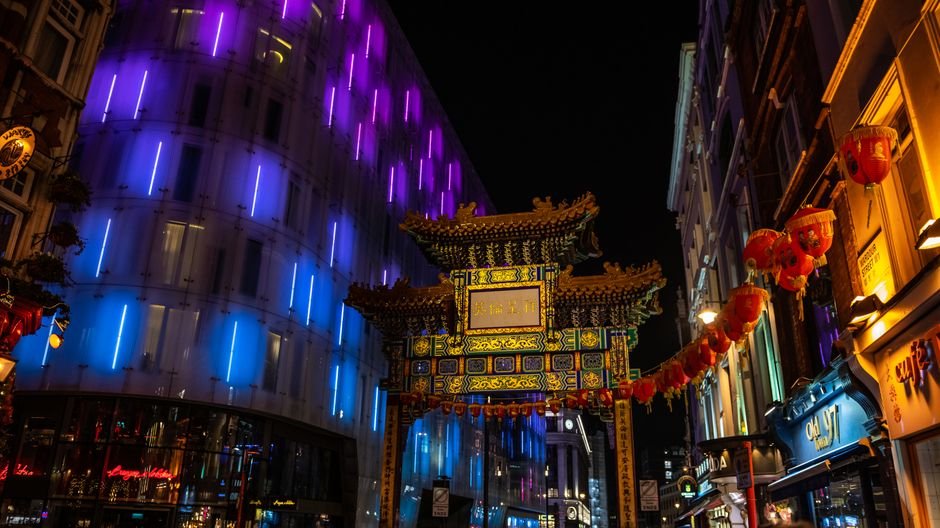
Once the skies finally cleared, leaving behind a freshly washed, gleaming streetscape, the true exploration could begin. London’s Chinatown, as it stands today, is a fascinating study in deliberate evolution. Unlike some older Chinese enclaves that grew organically around port areas, this particular iteration in Soho largely took shape from the mid-20th century onwards, after its original East End community dispersed. The elaborate, brightly painted pagoda-style gates, like the imposing structure on Wardour Street, are relatively recent, conscious architectural statements. They were designed not as relics of ancient history, but as clear markers defining a distinct cultural quarter, a deliberate act of placemaking that transformed a regular London street into a symbolic gateway. Older photographs show a much less ornate, more utilitarian street, underscoring this architectural transformation.
Yet, beneath these modern, decorative flourishes, the resilience of deeply rooted, family-run establishments persists. Take SeeWoo, for instance, which began as a modest grocery in the 1970s and still maintains a bustling supermarket here, its aisles brimming with unique ingredients, the air thick with earthy dried mushrooms and briny preserved seafood. Then there’s the venerable Wong Kei, a no-frills institution that has reliably served its signature roast duck and char siu for decades. Its exterior is unassuming, a simple sign above a perpetually steamed-up window, hinting at the culinary constancy within. The wooden tables inside bear the marks of countless meals, and the constant clatter of chopsticks, alongside shouted orders in Cantonese, forms an authentic, unchanging soundscape. These are living chronicles of generations, adapting to their surroundings while steadfastly preserving their core identity.
Want to dig deeper? For more historical context and detailed information about London, you can read more on Wikipedia.
🎧 Listen to my travel diary:
Origins of vibrant chinatowns
Stepping into London’s Chinatown is less about a sudden shift and more about a gradual immersion. The transformation along Gerrard Street isn’t just cosmetic; it’s a living record. The area wasn’t always the hub of Chinese culture it is today. Its roots trace back to the Limehouse district, near the docks, where Chinese seamen settled in the late 19th and early 20th centuries. That original community eventually dispersed, only to coalesce again in the 1950s around Gerrard Street. This move was driven by a need for community and economic opportunity, taking over what was then a relatively quiet part of Soho. The initial establishments were modest, often small laundries and family-run restaurants catering to a growing post-war Chinese population. These weren’t grand, ornate structures; they were pragmatic adaptations of existing Georgian and Victorian buildings. The earliest residents poured their resources into establishing a foothold, not into overt displays of cultural architecture. The smell of ginger and soy, a constant in the air now, slowly began to displace the scent of old English pubs. This pragmatic evolution is what truly defines the spirit of London’s vibrant chinatowns.
Structures
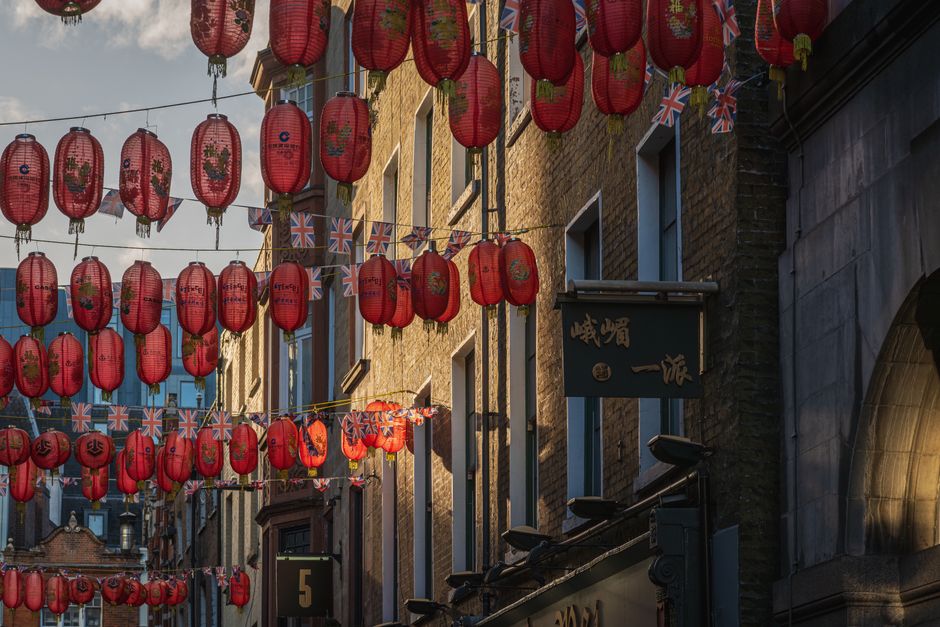
The architectural story here is one of transformation, not initial grand design. The buildings lining Gerrard Street and the surrounding alleys were largely 18th and 19th-century British structures. What you see now – the ornate gates, the pagoda-style roofs, the vibrant red and gold facades – are later additions, a deliberate effort starting in the 1980s to create a distinctive, recognizable cultural quarter. This wasn’t organic growth, but a planned reinvention. Look closely at the upper floors; you can still discern the original brickwork and window frames beneath the applied Chinese motifs. The four main gates, particularly the elaborate ‘Paifang’ on Gerrard Street and the smaller one on Wardour Street, are prominent examples of this conscious cultural branding. They were built with traditional Chinese architectural elements but adapted to the existing urban fabric. The carvings on these gates tell stories, often of dragons and mythical creatures, intended to symbolize prosperity and protection. It’s a striking visual contrast to the surrounding West End, a deliberate statement of identity. Walk down Lisle Street, and the storefronts, though modernized, often retain the narrow, deep layouts characteristic of London’s historical commercial buildings, now filled with the organized chaos of Chinese groceries and eateries. The sounds of Mandarin and Cantonese intermingle with the rumble of passing buses, creating a dense auditory layer to the visual spectacle.
Legacies
The true heart of this area lies within its oldest family-run establishments, places that predate the grand arches and tourist maps. Take SeeWoo Supermarket on Lisle Street. It’s not just a grocery store; it’s an institution. It started small, supplying ingredients that were once exotic to the broader British palate but essential to the local Chinese community. Generations have worked here, maintaining connections to suppliers and adapting to changing demands. The air inside is thick with the scent of dried mushrooms, star anise, and fresh produce. Their story is one of quiet persistence, growing from a modest shop to a sprawling emporium. Another example is Gerrard’s Corner, one of the earliest restaurants to establish a strong presence, serving traditional Cantonese dishes before the area exploded with diverse regional Chinese cuisines. These places aren’t just selling food; they are preserving culinary heritage. Interacting with the staff, often family members, reveals a deep knowledge of their offerings, a connection that mass-produced chains cannot replicate. These establishments are the anchors that give meaning to the concept of vibrant chinatowns in London, representing decades of community building and cultural preservation.
Contrast
When considering where to immerse oneself in British-Chinese culture, London’s Chinatown offers unparalleled scale and diversity, though it comes at a premium. Comparatively, a place like Manchester’s Chinatown, while also significant, offers a different value proposition. London’s iteration is a major tourist draw, driving up operational costs for businesses and subsequently the prices for consumers. A simple noodle dish in London might set you back £12-£15, whereas in Manchester, you could find a comparable, equally authentic meal for £8-£10. Why choose London then? For the sheer density of options, the historical layers, and its integration into a global city’s cultural tapestry. The architecture in London’s Chinatown, with its deliberate, grand statements, feels more like a curated experience than the more organic, less self-aware development seen in Manchester. You pay for the spectacle, the constant hum of activity, and the feeling of being at the heart of a truly international crossroads. It’s not necessarily about better food, but about the broader experience of a well-established, globally recognized cultural quarter. For a traveler prioritizing comprehensive cultural immersion over strict budgetary constraints on every meal, London provides the broader canvas.
Logistics
My travel plan for this exploration was a focused ‘3-day cultural immersion’ within London, dedicating significant time to Chinatown. I opted for a budget-conscious stay at The Z Hotel Piccadilly, located just a five-minute walk from Gerrard Street. The room, compact but functional, cost £120 per night. Customer service was efficient and polite, with staff readily providing directions and local information, but without much in the way of personal interaction – a typical London efficiency. For navigating the city, an Oyster card is essential; topping up £20 for a few days covers most bus and Underground journeys. Here are a few insider tips for making the most of your visit to vibrant chinatowns:
1. **Hidden Logistical Cost:** While many smaller eateries in Chinatown operate on a cash-only basis for small purchases, always carry some cash. Larger restaurants accept cards, but service charges (often 10-12.5%) are common and usually added to the bill automatically. This isn’t a tip; it’s an expectation.
2. **Bus Travel:** For a practical and scenic way to arrive, consider bus route 24, which runs directly to Leicester Square, a stone’s throw from Chinatown. It avoids the subterranean rush of the tube and offers views of London life.
3. **Seasonal Prices:** During major Chinese festivals like Lunar New Year, expect food prices at restaurants to be slightly elevated due to increased demand and special menus. Booking ahead is also crucial during these periods. This is when the area truly explodes with activity, transforming even further into a vibrant chinatown.
Purpose
Why choose London’s Chinatown for a cultural deep dive? The decision is driven by its unique blend of historical resilience and modern adaptability. This isn’t just about finding authentic dim sum, though you’ll find plenty. It’s about witnessing how a community, through architectural reinvention and continuous culinary innovation, has forged a distinct identity within a bustling global capital. The data points to its immense popularity and the sheer concentration of diverse Chinese regional cuisines—from fiery Sichuan to delicate Cantonese—that are harder to find in such proximity elsewhere in the UK. The area serves as a significant cultural nexus, drawing in both diasporic communities and curious outsiders. It’s a dynamic, ever-evolving space that continuously redefines what a Chinese cultural quarter can be outside of Asia. The historical narrative embedded in its transformation from an unassuming Soho street to a celebrated cultural landmark provides a rich backdrop for understanding immigrant stories and urban development. For an immersive experience in the heart of one of Europe’s most influential vibrant chinatowns, London stands as a primary choice. It’s an accessible, concentrated dose of East Asian culture within a Western European context, easily paired with visits to nearby cultural institutions like The National Gallery.
Exploring Vibrant Chinatowns: London, UK’s Culinary Heart – Outro
The streets here tell a layered story, not just of recent decades but of centuries. This part of London, once a collection of unremarkable Soho blocks, absorbed a new identity through sheer will and migration. Older structures, dating back to the late 17th century, were repurposed and adapted, their facades painted, their interiors reconfigured to serve new purposes. It’s a testament to urban evolution, how a place can physically transform without a complete demolition, simply by shifting its purpose. Establishments like the Chinatown Bakery on Newport Place represent this continuity, adapting former spaces for new traditions.
Observing the sheer density of businesses, the genuine grind of daily operations, highlights a constant reality. Beyond the brightly lit signs, the logistical truth of keeping a family-run business afloat in central London is relentless. Rents and operational costs are a significant, often invisible, pressure, forcing constant innovation and long hours. From my end, the weight of the cameras, the drone, the laptop, and all associated batteries is a daily calculation. Each lens choice means a physical burden, a trade-off between creative possibility and the physical toll of navigating crowded pavements and cramped stairwells. It impacts pace, limits spontaneous movements, and demands a tactical approach to every shot, a hidden cost in the pursuit of documentation.
What remains undeniable is the singular identity forged here. This district, having moved from its earlier roots in Limehouse to its current Soho location from the 1970s, exemplifies how communities carve out their space and persist. It’s more than just a cluster of businesses; it is a physical manifestation of a cultural anchor. The ongoing narrative of these urban enclaves offers deep insight into the resilience of culture and commerce.
The patterns of growth and adaptation within these vibrant chinatowns are compelling. Understanding how a community settles, transforms existing architecture, and maintains its distinct character is a critical part of this global project. Tomorrow, the plan is to move east to Brick Lane, a district known for its own history of diverse immigrant communities and their indelible architectural and social impact on London. The objective is to observe similar processes of cultural integration and architectural expression, continuing to document how such vibrant chinatowns and other cultural enclaves are shaped.
💻 The Nomad’s Tech Stack
Many of you ask how I manage to keep this diary online while constantly moving and documenting the world. I host my blog entirely on Hostinger. It’s incredibly reliable, fast, and ensures my content stays live even when I’m uploading massive photo files from remote locations.
💡 Traveler’s Pro Tip: Over the years of constant travel, I’ve learned the hard way. Now, I always rely on SEARADAR for renting yachts and boats with professional concierge support. It eliminates so much unnecessary stress when you’re on the road.
More from my travel diary:
Share This Diary Entry
Important Note: This diary is for entertainment and informational purposes. Always research local laws, travel advisories, and verify transport schedules before embarking on any journey. Affiliate links may be present.