Disclosure: This post may contain affiliate links, meaning I get a commission if you decide to make a purchase through my links, at no cost to you.
🎧 Listen to my travel diary:
Good morning from Siem Reap, Cambodia, where exploring ancient temples is an immediate, palpable reality. The air here carries the constant hum of tuk-tuks, a rich scent of woodsmoke from morning fires, and an underlying earthy dampness that clings to everything. After a long haul with Vietnam Airlines, the transition from air-conditioned cabin to this humid, earthen reality was stark, a clear departure from the sterile environments of modern travel. This is a world away from the manicured lawns and pre-packaged buffets I glimpsed from the taxi window, those sprawling, all-inclusive resorts promising a filtered version of Cambodia; my rented room above a noodle shop, however, feels more authentic, the sounds of local life seeping through thin walls, the distant clang of a metal spoon against a wok a constant soundtrack.
This morning, trying to order breakfast at a street stall near Pub Street, my attempts at Khmer were met with polite bewilderment. Pointing to what I thought was plain noodles, I ended up with a fiery dish that sent a jolt through my senses, a surprising heat that lingered on the tongue long after the last bite. It was an accidental awakening, a reminder that true immersion often comes with unexpected challenges, and sometimes, a kick of chili, a stark contrast to the half-board predictability of hotel dining. That same raw, unfiltered experience extends to the ancient temples themselves.
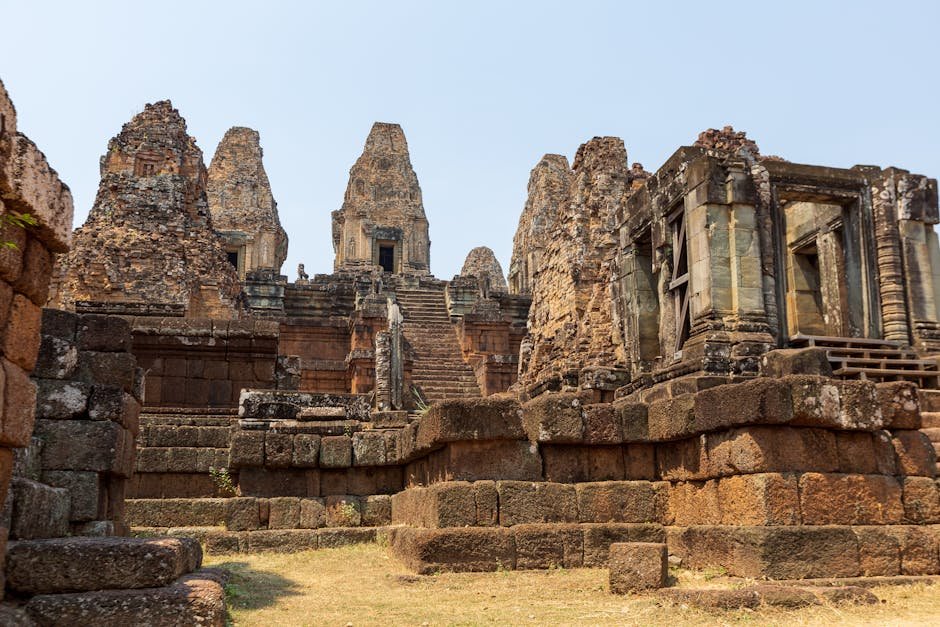
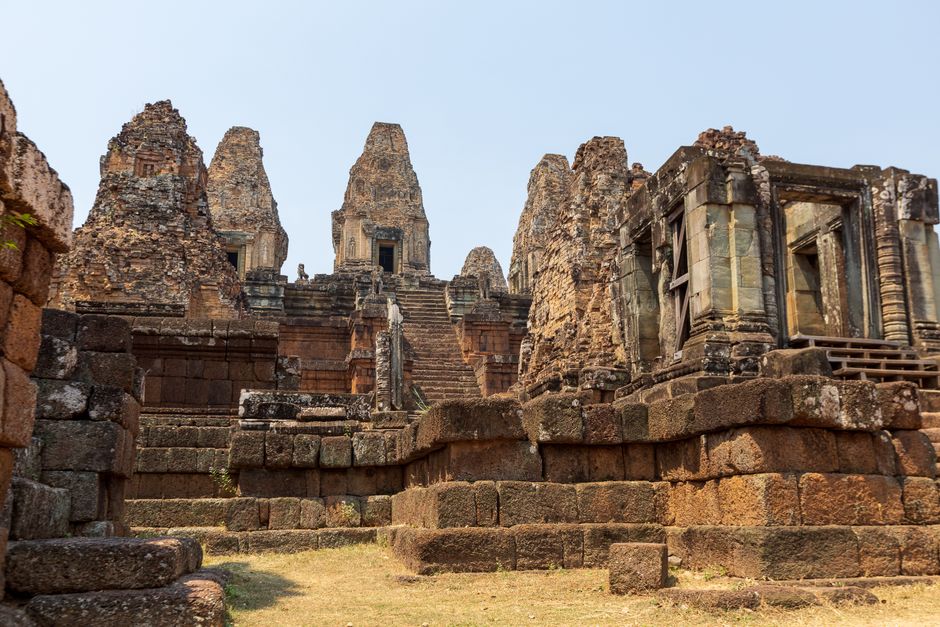
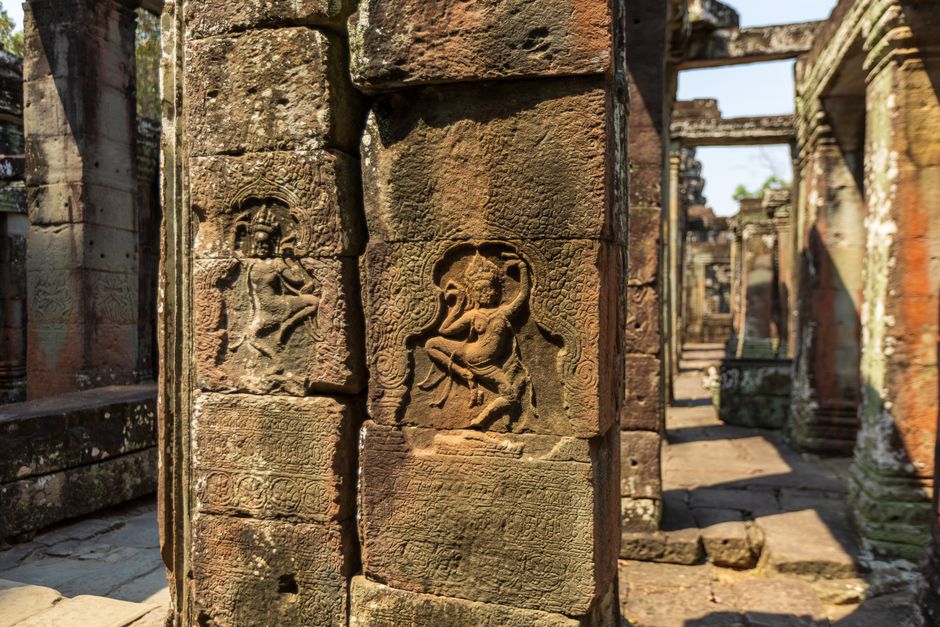
The very stones of Angkor Wat, even from a distance, speak of a meticulous, colossal effort. Up close, the construction methods become clearer. These aren’t simply stacked blocks; the massive sandstone slabs are often interlocked with precision, dry-jointed without mortar, relying on the sheer weight and careful shaping of each piece to create structural integrity. You can trace the faint lines where one block meets another, often so tightly fitted that a knife blade would struggle to slide between. The bas-reliefs, telling stories of Hindu mythology and daily life, are a testament to artistry and patience. Yet, centuries of monsoons and relentless sun have etched their mark. Erosion patterns are evident, particularly on the outer walls and exposed corners, where the delicate details of Apsara dancers and battle scenes have softened, some figures almost entirely worn away. You can almost map the decay, seeing how water runoff has carved channels, transforming sharp edges into gentle curves, slowly erasing the original function and vividness of these ancient narratives. It makes you consider not just how they were built, but how they are slowly returning to the earth, grain by grain.
💻 The Nomad’s Tech Stack
Many of you ask how I manage to keep this diary online while constantly moving and documenting the world. I host my blog entirely on Hostinger. It’s incredibly reliable, fast, and ensures my content stays live even when I’m uploading massive photo files from remote locations.

Unveiling Ancient Temples’ Engineering
The air in Siem Reap carries the distinct scent of red dust mingling with blooming jasmine from temple grounds, a constant reminder of the profound history etched into the very stones around us. My chosen path here was a practical 3-day archaeological exploration, focusing intently on the construction methods of the ancient temples. This itinerary, costing approximately $62 for the Angkor Pass, provided ample time to scrutinize the details often overlooked by those on a whirlwind tour. I find myself constantly comparing this deep dive into the engineering marvels here with the more generalized cultural immersion offered in a place like Battambang. While Battambang offers compelling insights into rural Cambodian life and colonial architecture, Siem Reap, despite its popularity, delivers unparalleled access to the sheer scale and ingenuity of ancient temples. The sheer volume of intricately carved structures and the visible evidence of advanced masonry techniques are the data points that argue for Siem Reap’s unique value. Insider Tip 1: For local transport, pre-negotiate a 3-day *remork* driver package for around $60-75 USD; it’s more efficient than daily haggling and ensures a consistent guide through the temple zones.
My dry bag today holds the Sony Alpha 7R V with the FE 24-70mm f/2.8 GM II lens, ready to capture both the sweeping vistas of the complexes and the minute details of the stone joints. The first thing that struck me at Angkor National Museum was the display of interlocking techniques. It’s not just stacked rock; these structures are held together by precision-cut tenons and mortises, sometimes dovetail joints, creating a stability that has defied millennia of monsoons and seismic activity. You can trace the lines where one block of sandstone, often weighing tons, slots perfectly into another, without the use of mortar. The sheer manpower and geological understanding required to quarry, transport, and then precisely shape these blocks from distant sites like Phnom Kulen is staggering. The scale of these ancient temples is not merely about size, but about the invisible engineering beneath the surface. This practical, data-driven approach to the structures answers the ‘Why choose this?’ question for me: it’s an unparalleled lesson in ancient civil engineering.
Observing Decay and Purpose
The intricate bas-reliefs adorning the walls of the ancient temples tell a story of both incredible artistry and relentless environmental assault. At Banteay Srei, known for its fine pink sandstone carvings, the erosion patterns are a stark visual timeline. Where protected by an overhang or deeper cuts, the mythical figures and narratives retain a sharp definition. But on exposed sections, the relentless tropical rain and wind have softened edges, blurred facial features, and even effaced entire sections of script. You can see how water runoff, channelled by gravity over centuries, has carved grooves and worn down the most vulnerable parts of the stone. It’s a physical manifestation of time passing, highlighting the original function of these carvings – not just decorative, but narrative, a public record etched in stone. The original vividness, meant to educate and inspire, has given way to a muted, softened history. Insider Tip 2: Visit the eastern gopura of Preah Khan late in the afternoon; the low sun highlights the remaining details of the carving work, making the erosion patterns more dramatic and easier to photograph without harsh glare.
My accommodation for this deep dive into the ancient temples has been the Golden Banana Residence, priced at around $35 USD per night for a fan-cooled double room. The service has been remarkably attentive; upon arrival, they provided a detailed map of the temple complex and connected me with a reliable English-speaking *remork* driver without any pressure. This personal touch, far removed from the anonymous check-ins of all-inclusive resorts, made settling in straightforward and efficient. For food, I’ve bypassed the hotel’s breakfast offerings for local spots like Marum or street vendors near Psar Chas (Old Market), where a hearty, local meal costs under $3. This budget-conscious approach frees up funds for experiences like an early morning visit to Srei Temple, well before the tour buses arrive, allowing for quiet observation of the carvings.
Understanding Stone Artistry
The distinct differences in stone types and their carving properties are evident across the complexes of ancient temples. The grey sandstone of Angkor Wat allows for monumental scale and robust, deep carving, but the finer details often show surface flaking due to the material’s grain. In contrast, the pinkish sandstone of Banteay Srei, a harder, finer-grained material, permitted an astonishing level of detail and sharpness in its bas-reliefs, even allowing for undercut sections that give the figures a three-dimensional quality. This choice of material was not arbitrary; it dictated the artistic possibilities and the longevity of the finished work. Observing these variations firsthand offers a practical understanding of the builders’ material science and artistic vision.
Sustaining Preservation Efforts
The ongoing preservation work at these ancient temples is a critical observation point. Scaffolding often frames sections where restoration teams are meticulously cleaning and reinforcing crumbling structures. You can sometimes see new stone inserts, carefully matched in colour and texture, integrated into damaged walls. This intervention is a race against time and the elements, particularly water damage from the annual monsoons. The focus on structural integrity is paramount, ensuring that the unique interlocking construction continues to bear the immense weight of the upper galleries. Insider Tip 3: Buy your Angkor Pass directly from the official ticket office the day before your planned temple visit, ideally after 4:45 PM. It’s valid for the next day, and you can enter for free to catch the sunset without using up one of your precious days.
Outro: The Unyielding Structure
The day peeled back layers, not of history, but of pure engineering. Observing the vast scale of these ancient temples, the precision of their construction methods became the dominant thought. How the massive blocks fit, often without a sliver of binder, speaks volumes. Each interlocking stone joint, visible in the lower courses, carried immense weight. Run a finger along a seam; the fit is still impossibly tight, a testament to the skill involved, not just in carving but in quarrying and placement. These structures weren’t simply assembled; they were meticulously woven from hard, grey material.
Further up, the narrative carved into the surfaces offered another lesson. The carved surfaces, once sharp with details of stories and figures, now show the relentless work of time. Mapping the erosion patterns reveals where water once flowed, where wind abraded. Sections of what must have been vibrant, intricate bas-reliefs are now softened, almost ghost-like, their original function still discernible but fading. You can trace the path of centuries in these grooves. The texture of the air, thick with a scent indefinably old, feels like it has been part of this process forever.
The real price of entry isn’t just the ticket; it’s the sheer mental effort to absorb the detail, to really see past the postcard view. Understanding these ancient temples requires looking at the minutiae, not just the grand scale. It demands patience and close observation. The practical impact of this observation is clear: tomorrow demands a slower pace, a more focused approach, less driven by the clock and more by light and shadow.
My Canon R5, paired with the RF 24-105mm f/4L IS USM, feels heavy now, but the images stored inside hold the evidence of these details. Tomorrow, I’m heading towards the Wat Bo area. I need to find a quiet corner, away from the main routes, to document some of the less-visited, smaller brick structures. Perhaps there, the joining techniques will be simpler, more foundational, offering a clearer glimpse into the earliest methods before the grand scale of the main complexes. A deeper look at the foundational elements, less disturbed by later additions and tourist traffic.
💡 Traveler’s Pro Tip: Over the years of constant travel, I’ve learned the hard way. Now, I always rely on Localrent for finding the cheapest local car rentals without massive hidden deposits. It eliminates so much unnecessary stress when you’re on the road.
Want to dig deeper? For more historical context and detailed information about Siem Reap, you can read more on Wikipedia.
More from my travel diary:
Share This Diary Entry
Important Note: This diary is for entertainment and informational purposes. Always research local laws, travel advisories, and verify transport schedules before embarking on any journey. Affiliate links may be present.