Disclosure: This post may contain affiliate links, meaning I get a commission if you decide to make a purchase through my links, at no cost to you.
💻 The Nomad’s Tech Stack
Many of you ask how I manage to keep this diary online while constantly moving and documenting the world. I host my blog entirely on Hostinger. It’s incredibly reliable, fast, and ensures my content stays live even when I’m uploading massive photo files from remote locations.
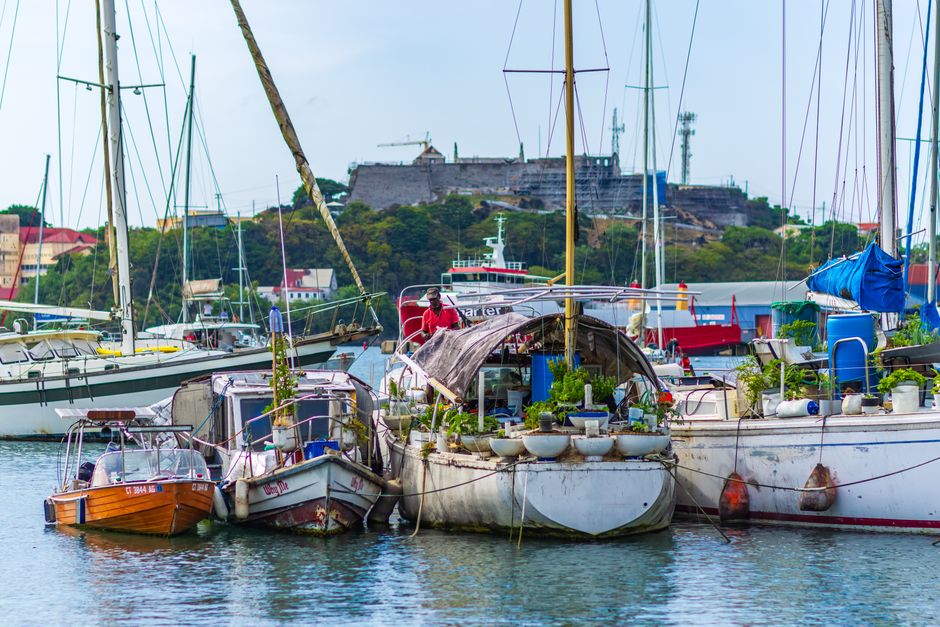
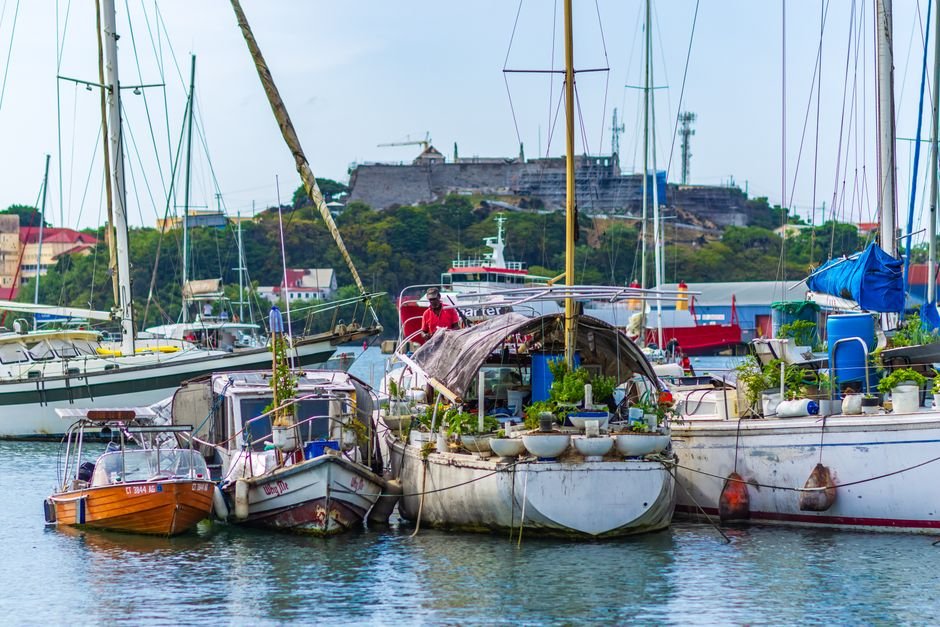
Experiencing island hopping Caribbean firsthand: Good morning from Port Elizabeth, Bequia, where island hopping the Caribbean has brought me to a wooden dock where a man is scaling a red snapper with the flat of a knife, the scales flicking onto planks worn smooth by decades of the same motion. The fish smell is sharp and clean. Behind him, the ferry from Kingstown is unloading crates of onions and bottled water. This is Admiralty Bay, and everything here still runs on the water.
I landed yesterday on Mustique Airways, a small plane that dropped onto the airstrip on the island’s southern end. From the air you see the truth of the place. Bequia is barely seven square miles. The harbor does all the work.
Port Elizabeth grew up around this bay because the water is deep and protected. Whalers used it. So did traders. The island’s history is stitched to boatbuilding and hunting, not sugar. Bequia still holds one of the few International Whaling Commission aboriginal permits, hunting a handful of humpbacks a year by hand from open sailboats. You feel that maritime spine everywhere. The docks are laid out for cargo and fishing, not tourists. Ferries follow the practical logic of tide and market days, not comfort.
The waterfront path, the Belmont Walkway, curves along the shore linking the town to the guesthouses. It floods at high tide in spots. Nobody has fixed this. Nobody seems bothered.
Then the rain came. A tropical downpour, sudden and total, the kind that turns the harbor gray in seconds and sends everyone under any roof available. Mine was a small bookstore off the main street. No sign. The owner, an older woman, kept selling secondhand paperbacks while the water hammered the tin above us. I spent two hours there. She talked about the whaling families, about how the ferry schedules shifted when the new dock went in. She sold books on local birds and old sailing charts. The place smelled of damp paper and coffee.
By the time it cleared, the light had gone soft and the streets steamed. My gear stayed dry inside my pack. I skipped the half-board hotels up the hill entirely. My rented room down here costs a fraction and puts me at the water where things actually happen. That is the point of coming this far out.

💡 Traveler’s Pro Tip: Over the years of constant travel, I’ve learned the hard way. Now, I always rely on Airalo for getting an instant eSIM to avoid insane data roaming charges. It eliminates so much unnecessary stress when you’re on the road.

Landing on Bequia for Real Island Hopping Caribbean Routes
The small boat cut the engine near Port Elizabeth just after noon. Salt hung thick in the air. I stepped off with my weather-sealed DSLR body and a single 35mm prime lens strapped across my chest, the drone and second body left behind on Saint Vincent because the inter-island vessel enforces strict weight limits. This is the practical reality of island hopping Caribbean waters. You travel light or you pay.
The old whaling economy shaped everything here. Bequia earned an International Whaling Commission exemption, allowing a limited traditional catch. That maritime history still dictates how the harbor functions, where boats moor, and when the small vessels depart. Nothing here runs on tourist logic. It runs on the sea.
Tracing Whaling Heritage Along the Waterfront
I walked south toward the old shore where the harpoon crews once worked. The Bequia Heritage Museum sits quietly, run by a family tied directly to the whaling lineage. Entry cost me around 10 EC dollars. Inside, hand-built model boats and carved bone tools tell the concrete story of the salt-and-oil trade that built this settlement. You can read the maps at Bequia Tourism for the full route history.
The smell near the water was diesel and grilled fish. A woman fanned coals under a rack of jacks. I bought two for 15 EC. Charred skin, soft flesh, lime squeezed by hand. This is why island hopping Caribbean routes beat any resort buffet.
Comparing Bequia With Nearby Union Island
People ask why Bequia over Union Island. Here is the honest breakdown. Union Island is smaller, wilder, and cheaper on paper, with kitesurfing dominating the economy. But the boat connections are sparse, sometimes only two departures daily. Bequia has consistent morning and afternoon links, which matters when you plan a real itinerary.
Value versus popularity. Union wins on isolation. Bequia wins on logistics and food variety. For a traveler moving fast, Bequia is the practical base for island hopping Caribbean chains. You lose some solitude. You gain reliability.
Insider Tip 1: The Bequia Express and Admiralty Transport run competing schedules. Cross-check both boards physically at the harbor. Online times are frequently wrong by 30 to 45 minutes.
Booking a Real Room Without Overpaying
I stayed three nights at the Frangipani Hotel, an old sea captain’s house converted into rooms. The garden-view room ran me 165 USD per night. Not cheap, but the staff were genuinely helpful. The front desk woman drew me a hand-map of the coastal footpath and warned me about slippery sections after rain. That kind of specific, useful hospitality is rare.
Compare that to the all-inclusive spots on Saint Vincent charging 400 USD half-board for food you never leave the property to find. The Frangipani forces you outside. You eat where locals eat. Check their listing at Frangipani Bequia.
Insider Tip 2: Ask for the older rooms in the stone main house, not the newer garden units. Same rate, thicker walls, cooler air, no fan noise.
Walking the Fig Tree and Coastal Paths
My plan was simple. A three-night slow immersion, no packed schedule. Day one I hiked to Hope Bay on the windward side. The trail crosses dry scrub and old estate land tied to the colonial cotton and arrowroot trade. Arrowroot processing was serious business here before the market collapsed. You still see the remnants of drying floors if you know where to look.
I ate lunch at the Fig Tree, a restaurant that doubles as a school-support project. Curry goat, rice, provisions, 40 EC. The owner, Cheryl, sat and talked about how the boat schedules dictate her supply deliveries. History and logistics are the same conversation here. Practical island hopping Caribbean travel means understanding that food arrives when the sea allows.
Insider Tip 3: Carry small EC bills. Many food spots have no card machine, and the ATM near the harbor frequently runs empty by late afternoon on weekends.
Deciding Why This Base Beats the Alternatives
Why choose Bequia? The data is simple. Room rates average 30 to 40 percent lower than comparable Saint Vincent resorts. Boat frequency is roughly double that of the southern Grenadines. Food costs run 15 to 40 EC per plate versus fixed resort pricing near 90 EC equivalent.
I photographed the old harbor wall in the flat evening light, the 35mm forcing me close to the texture of weathered stone. You can see the archived shipping records referenced at the national government site if you want proof of the trade lineage.
The wind picked up as the sun dropped. Fishermen coiled lines. Somewhere a radio played soca low. For anyone serious about island hopping Caribbean routes on a working budget, Bequia is the honest choice. Not perfect. But real, connected, and cheap enough to stay longer than you planned.
Final Entry: Whaling Roots and the Weight of Distance
Last entry from this rock. The island’s north end still runs on old logic. The whalers who worked Friendship Bay two centuries back set the pace, and nothing here moves faster than a boat needs to. Salt trade never dominated this island the way it did others in the chain. Fishing did. That’s why the harbor curves the way it does, shallow and forgiving, built for hauling in, not for cargo cranes.
I walked the coastal road toward Paget Farm this morning. The wind off the water tastes of salt and diesel. Fishermen mending nets under almond trees. Nobody hurries. Island hopping Caribbean routes always sound romantic until you sit with the schedules. Boats leave when they leave.
Here’s the concrete lesson of the day. The interisland boat fare I’d budgeted was only half the real cost. Baggage handling for my camera cases ran extra, and the “port fee” nobody mentions upfront added another chunk. Cash only. No card machine within reach. I learned this the hard way, digging through pockets while the deckhand waited. Budget an extra twenty per crossing for the invisible charges. That’s the honest math of island hopping Caribbean-style.
Dinner was fried fish and breadfruit from a roadside stall in Paget Farm. Four dollars. The All-Inclusive resort guests up the hill paid forty for something less honest. The breadfruit was charred right, smoky, dense.
Tomorrow I head toward Hamilton, up past the old fort ruins on the ridge above the harbor. The gun batteries there guarded the anchorage against French raids. I want to trace how those defensive sightlines still frame the modern harbor approach. Early start. The road climbs hard, and my knees know it.
Want to dig deeper? For more historical context and detailed information about Bequia, you can read more on Wikipedia.
🎧 Listen to my travel diary:
More from my travel diary:
Share This Diary Entry
Important Note: This diary is for entertainment and informational purposes. Always research local laws, travel advisories, and verify transport schedules before embarking on any journey. Affiliate links may be present.