
Disclosure: This post may contain affiliate links, meaning I get a commission if you decide to make a purchase through my links, at no cost to you.

💡 Traveler’s Pro Tip: Over the years of constant travel, I’ve learned the hard way. Now, I always rely on Compensair for getting up to €600 compensation for delayed or canceled flights. It eliminates so much unnecessary stress when you’re on the road.
The stark, red dust coating the tires of the rental car, still clinging from the gravel lot near the airport, is a visceral reminder of the earth that cradled the ancient cliff dwellings. This is Cortez, USA, a place where the very ground breathes history. The air, thin and dry at 6,200 feet, carries the faint, resinous scent of piñon pine and juniper, a smell that must have been constant for millennia. I arrived via Denver Air Connection, the small plane banking sharply over the high desert plateau, revealing the vast, silent expanse of mesas and canyons that define this corner of the world. My first observation in the town itself, beyond the immediate functional architecture of the airport, was the enduring presence of sandstone. It’s not just a material here; it’s a narrative. Many of the older commercial buildings downtown, particularly along Main Street, feature facades of local red sandstone, often cut into precise, rectangular blocks. The mortar lines are thin, almost invisible, suggesting a skilled hand that understood the material’s strength and natural fit. This isn’t decorative; it’s fundamental. It speaks to a continuity of construction, an echo of the meticulous masonry found in the Ancestral Puebloan sites nearby. The smooth, cool touch of the stone on a building corner, worn by decades of wind and sun, feels like touching the past itself.
The quiet hum of the town’s daily rhythm is punctuated by the occasional low rumble of a passing pickup truck, but beneath that, a deeper silence persists, one born of immense time. The landscape here isn’t just a backdrop; it’s an active participant in the story of human habitation. The geology dictates everything: the availability of water, the defensible positions, the materials for shelter. The Ancestral Puebloans, master builders of their time, understood this implicitly. Their structures, even those reflected in the Cortez Cultural Center’s exhibits, reveal an intimate knowledge of thermal mass and passive solar design long before those terms existed. The weight of centuries presses down, not oppressively, but with a profound gravity that demands attention. Even a simple walk past the Cortez Public Library, a more modern structure, highlights the local reverence for natural elements, with its use of native stone accents and colors that blend seamlessly into the high desert palette. The taste of the dry air on my tongue, slightly metallic, seems to carry particles of that same ancient dust, connecting me to the hands that first shaped this enduring landscape.
🎧 Listen to my travel diary:
Want to dig deeper? For more historical context and detailed information about Cortez, you can read more on Wikipedia.
Observing Ancient Cliff Dwellings
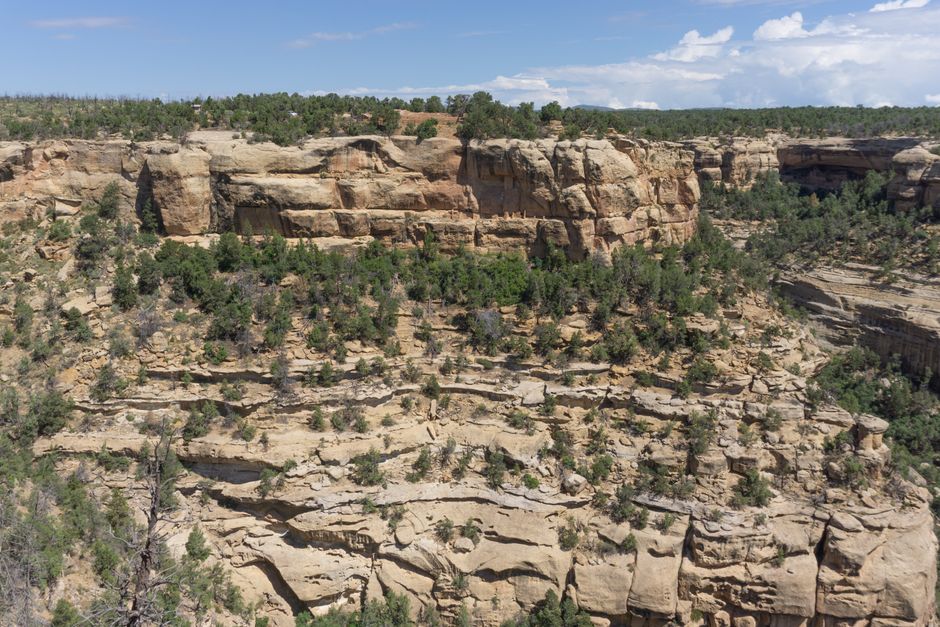
The history of Cortez is inextricably linked to the ancient cliff dwellings of the Ancestral Puebloans. These remarkable structures, built into natural alcoves, showcase an ingenuity in construction that predates modern techniques by centuries. My Canon 5D Mark IV, with its EF 24-70mm f/2.8L II USM lens, focuses on the details of their masonry. The walls, primarily sandstone, were meticulously shaped using harder stones. A mortar of soil, water, and ash bound these stones, often with smaller “chinking” stones filling gaps for added stability. The sheer scale of these ancient cliff dwellings, some with hundreds of rooms, suggests complex communities. These structures were not merely shelters; they were intricate living spaces, often featuring kivas – round, subterranean chambers central to their social and ceremonial life. Visitors can explore these incredible ancient cliff dwellings at Mesa Verde National Park, a short drive from Cortez.
Dissecting Early Settler Masonry
Moving from the ancient cliff dwellings, Cortez itself holds its own layers of historical construction. The city’s founding in 1886 was driven by the Montezuma Valley Water Supply Company, which required housing for workers building irrigation canals. Early structures, particularly those from the late 19th and early 20th centuries, demonstrate a shift to more formalized, yet still locally sourced, building methods. The Stone Block/Wilson Building, erected in 1889 by Peter Baxstrom, is a prime example. This two-story structure utilized locally quarried sandstone, a material prevalent in the region. Baxstrom, a Swedish immigrant and experienced mason, is credited with numerous sturdy buildings in Montezuma County. The large stones were dragged from a quarry west of town, then lifted into place with chains and straps. This building, like many of its era, initially had its stonework exposed, a direct contrast to the plastered finishes of some ancient cliff dwellings.
Tracing Architectural Evolution on Main Street
Main Street, Cortez, serves as an architectural timeline. The Montezuma Valley National Bank Building, constructed between 1908 and 1910, stands as a testament to early 20th-century commercial architecture. Also built from locally quarried sandstone by the Baxstrom brothers, this building conveys a sense of stability and prosperity. Its arched windows and carefully arranged stonework distinguish it from simpler timber constructions of the time. The building’s original 1908 construction was followed by an 1,800-square-foot addition in 1910, using similar materials. This expansion highlights the town’s growth. Contrast this robust construction with the more organic, adaptive nature of the ancient cliff dwellings, which often conformed to the natural contours of their alcoves.
Uncovering Civic Building Heritage
The Calkins School building, constructed in 1909, represents another significant historical structure in Cortez. This educational facility, originally built by Peter Baxstrom using local rock, served the community for decades. Its construction, like the bank, speaks to the permanence and ambition of the burgeoning town. The Cortez Cultural Center, housed in a historic commercial building from 1909 (the former E.R. Lamb store), also showcases this era’s architectural style. Its facade, originally steel, brick, and stucco, was shipped by train from St. Louis, a detail illustrating the increasing availability of manufactured materials beyond local stone. Inside, the center now hosts historical and archaeological exhibits, offering insights into both settler history and the legacy of the ancient cliff dwellings. More information can be found at the Cortez Cultural Center.
Exploring Modern Preservation Efforts
Cortez actively preserves its past. The city maintains a local Register of Historic Resources, encompassing over 60 historic buildings. The Historic Preservation Board works to educate the public on the area’s rich history. This commitment extends to understanding the profound heritage of the ancient cliff dwellings and the later structures that define Cortez. The Montezuma Heritage Museum, located at 35 S. Chestnut St., offers further exploration into the region’s diverse past, from ancestral Puebloan artifacts to pioneer life. Its exhibits provide context to the architectural evolution seen throughout the city. Montezuma Heritage Museum is a valuable resource for those seeking to connect with the deep historical layers of this unique corner of the Southwest.
Cortez, USA: Unearthing Ancient Cliff Dwellings – Outro
The weight of brick in Cortez’s older buildings feels substantial. Each course laid, a testament to early ambition. These structures, unlike the intricate planning of the ancient cliff dwellings, speak of a different kind of survival. Their foundations hold firm against the elements, a simpler, direct approach to permanence. Steel beams, where visible, hint at later reinforcements, a constant evolution of building techniques. The deep cultural impact of seeing these layered histories is profound. It’s a stark reminder of human adaptation, from the ingenuity of those who crafted the ancient cliff dwellings, to the settlers who stacked brick and wood here. The air carries the scent of dust and distant cooking fires, a constant sensory anchor. I feel the rough texture of weathered wood on an old doorway, the cool touch of an exposed brick wall, absorbing the tactile history. The sound of distant traffic hums, a modern counterpoint to the quiet endurance of these walls. Every structural detail, from window placement to roofline, tells a story of available resources and prevailing needs. The sheer effort of construction, building a town from scratch, resonates deeply. This city, built brick by brick, holds echoes of the earliest human efforts to create shelter and community in this challenging terrain. The visual evidence of growth, expansion, and changing economic fortunes is etched into the very fabric of its older blocks. The way buildings abut each other, the slight variations in brick color and texture, all contribute to a compelling, silent account of human endeavor. Tomorrow, I will meticulously document the details of Cortez’s central historical core. My plan is to focus on the transitions in architectural styles, seeking the precise points where materials and methods shifted, marking new eras of construction in Cortez. I will trace the city’s growth through its very fabric, examining how each generation left its indelible mark on the built environment. This systematic approach will truly unearth the city’s architectural evolution.

💻 The Nomad’s Tech Stack
Many of you ask how I manage to keep this diary online while constantly moving and documenting the world. I host my blog entirely on Hostinger. It’s incredibly reliable, fast, and ensures my content stays live even when I’m uploading massive photo files from remote locations.
More from my travel diary:
Share This Diary Entry
Important Note: This diary is for entertainment and informational purposes. Always research local laws, travel advisories, and verify transport schedules before embarking on any journey. Affiliate links may be present.