
My Raw Experience With Gus: Applying Dog Training Tips for Puppies to a Senior Golden – Introduction
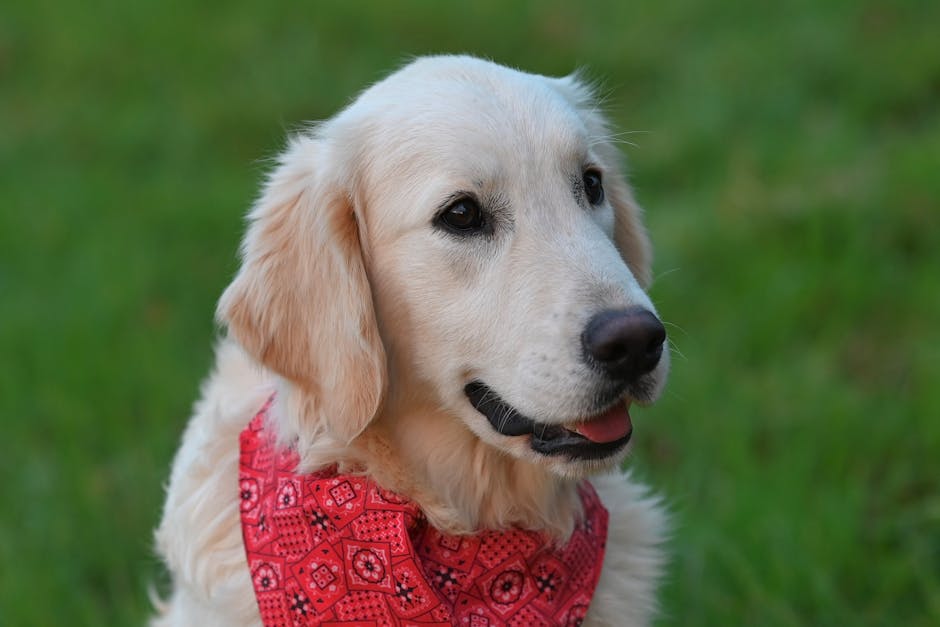
March 5th, 2026. The morning light, a soft, pale gold, filtered through the oak tree in my small backyard, dappling the dew-kissed grass. I stood there, a steaming mug of Kona blend coffee warming my hands, the comforting aroma mingling with the crisp morning air. Beside me, Gus, my magnificent, fourteen-year-old Golden Retriever, ambled with a familiar slowness towards his favorite sniffing spot near the azaleas. His muzzle, once a vibrant golden, was now a distinguished silver, and his eyes, though still bright with unwavering loyalty, held the wisdom of many seasons.
I’ve lived in this comfortable house for years, my dedicated home office overlooking this very yard, and Gus has been my constant companion through every blog post and late-night brainstorm. Lately, however, I’ve noticed the subtle shifts. The way he hesitates at the top of the three steps leading down to the patio. The occasional moment of confusion when I call his name, or when we’re out for our morning walk in Maplewood Park and he momentarily forgets the ‘heel’ command that was once second nature. It pulls at my heartstrings, seeing the inevitable march of time etched onto my best friend.
It was this observation, this deep affection for him, that sparked a rather unusual idea, one I decided to explore for you all: could I take classic dog training tips for puppies and apply them to my wise, wonderful senior dog? It sounds counterintuitive, I know. We often hear about “you can’t teach an old dog new tricks,” but what if it wasn’t about new tricks, but about reinforcing the foundational behaviors, the muscle memory that might have faded over time? Could gentle, positive reinforcement, the kind we lavish on a bouncy eight-week-old, rekindle some of Gus’s youthful enthusiasm and sharpen his cognitive function?
The thought began as a quiet whisper in my mind, a playful challenge. Could a routine of short, focused sessions, perhaps using his favorite Zuke’s Mini Naturals treats and my old clicker from when he was just a furry torpedo of energy, make a difference? I imagined going back to basics: ‘sit,’ ‘stay,’ ‘come’ – all the commands we taught him with such dedication when he was just a little fluffball. The very idea was both exciting and a little daunting, but for Gus, I was willing to try anything. This journey, I quickly realized, wasn’t just about training; it was about connection, about spending quality time, and about cherishing every single moment we have together.
💡 Pro Tip for Bloggers: If you are planning to start your own blog, you’ll need a reliable hosting plan to get online, and I personally recommend checking out
Hostinger.
You can use this link to grab a special discount up to 20% and get your website up and running smoothly.

The Weight of Years and a Lightbulb Moment
The March air, crisp yet hinting at warmer days, always brings a certain clarity. That morning, with my first mug of Starbucks Pike Place Roast steaming in my hand, I watched Gus. He was slowly, deliberately, navigating the dewy Kentucky Bluegrass in our backyard, his once golden fur now a distinguished silver around his muzzle and eyes. The dappled sunlight filtering through the mature oak cast shifting patterns on his thick coat as he sniffed at a particularly interesting patch near the cedar fence. It struck me then, watching him take an extra moment to rise after a quick, low-to-the-ground investigation: Gus wasn’t just old; he was feeling old. His movements weren’t as fluid, his responses to my calls a beat slower. My loyal, ever-patient Gus, the dog who’d been with me through thick and thin for over a decade, deserved more than just managing his senior years. He deserved a renewed sense of purpose, a mental spark. That’s when the crazy idea, born from countless hours watching Zak George’s Dog Training Revolution on YouTube for friends with new puppies, hit me: what if I treated Gus like a puppy again? Not to infantilize him, but to re-engage that incredible Golden Retriever intelligence, that innate desire to please, using positive reinforcement techniques designed for young minds.
Equipping for a “New” Old Dog
My home office, usually a sanctuary for coding and content creation, transformed into a makeshift dog training strategy center. I pulled up Google Scholar for articles on cognitive enrichment for senior dogs and cross-referenced them with modern puppy training methodologies. The core principles of positive reinforcement, clicker training, and short, frequent sessions seemed universally applicable. I ordered a fresh batch of Zuke’s Mini Naturals, Gus’s all-time favorite low-calorie training treats, from Chewy.com, along with a bright red PetSafe Clik-R clicker. I even dusted off my old copy of “The Art of Raising a Puppy” by the Monks of New Skete, not for its harshness, but for its foundational understanding of canine psychology. My goal wasn’t to teach Gus basic commands he’d known since he was six months old, like “sit” or “stay.” Instead, I aimed to introduce novel challenges, stimulate his brain, and adapt techniques to his physical limitations. For instance, I thought about teaching him to “find it” with a favorite toy hidden under a blanket, or to “touch” my hand with his nose, simple games that demanded focus without putting stress on his joints.
Paws-On Approach: Gus and the Clicker
The first few sessions were… interesting. Gus, bless his heart, looked at me with an expression that clearly said, “Are you serious right now, Dad?” We started in the living room, a familiar, quiet space. I used the clicker for the first time in years, trying to mark even the slightest, desired movement. When I tried to reward him for simply looking at a specific toy, he just tilted his head, his ears perked, a soft “huff” escaping him. It felt like trying to explain quantum physics to a toddler – he understood the general concept of “treats,” but the precise timing of the clicker was foreign after so long. I shifted. Instead of introducing new commands immediately, I started by re-engaging his existing ones, but with a new twist: the clicker. “Gus, sit!” I’d say, and the moment his rear touched the ground, click, followed by a Zuke’s Mini. His ears perked. Oh, this old trick. A glimmer of understanding. I realized the challenge wasn’t just teaching him new things, but teaching me to be a more precise and patient trainer. His hearing isn’t what it used to be, so visual cues became paramount. On our walks to Maplewood Park, instead of just letting him amble, I’d incorporate short bursts of “heel” practice, rewarding him when he kept pace without pulling on his PetSafe Easy Walk harness, marking the behavior with a quiet click rather than a verbal “good boy” at first.
| Training Area | Typical Puppy Focus | Gus (Senior Golden) Focus | Specific Adaptation for Gus |
|---|---|---|---|
| Potty Training | Establishing outdoor habits, reducing indoor accidents. | Maintaining existing habits, accommodating increased frequency/urgency. | More frequent outdoor breaks, positive reinforcement for immediate eliminations. |
| Basic Obedience (Sit, Stay, Come) | Introducing commands, building consistency, short attention spans. | Reinforcing known commands, adapting to slower physical response, potential hearing/vision decline. | Clearer visual cues, slower pace, higher value treats, clicker for precise timing. |
| Leash Manners | Preventing pulling, teaching proper walking beside owner. | Maintaining polite walking, managing joint stiffness, preventing meandering. | Shorter, more frequent walks; focus on comfort and smooth movement; positive reinforcement for loose-leash walking. |
| Socialization | Exposure to new people, dogs, environments. | Comfort in familiar surroundings, gentle interactions, avoiding overwhelming situations. | Controlled, calm interactions with known, friendly dogs/people; emphasis on positive experiences. |
| Cognitive Enrichment | Simple puzzle toys, interactive play. | Challenging puzzle toys, scent work, learning new, low-impact tricks. | Snuffle mats for scent games, teaching “find it” with treats, nose-touch games for mental stimulation. |
Renewed Spark and Unspoken Understanding
The change wasn’t overnight, nor was it always linear. Some days, Gus would be bright-eyed and engaged, performing his “touch” command with enthusiastic nose-nudges, earning a happy click and a juicy piece of chicken (a special high-value treat). Other days, he’d simply look at me, sigh, and lie down. And that was okay. I learned to read his cues better, to respect his limits. The most profound shifts weren’t just in his “performance,” but in his overall demeanor. He seemed more alert, his eyes brighter. Our daily training sessions, often just five to ten minutes in the dappled morning light of the backyard or a quick burst during our afternoon walk, became our shared ritual. It wasn’t about perfect execution; it was about the engagement, the focused attention, the subtle dance of communication between us. The act of training, even with a senior dog, had reignited something in both of us. His trust in me deepened, if that was even possible, and I felt a renewed appreciation for his enduring spirit. I found myself paying closer attention to his subtle signals, anticipating his needs, and celebrating every small victory with genuine joy. The grey around his muzzle still spoke of his age, but the spark in his eyes was pure, vibrant youth.
Expert FAQs: Re-engaging Your Senior Dog
-
Q: Is it really effective to use puppy training methods on a senior dog like Gus?
A: Absolutely! Senior dogs, much like puppies, thrive on mental stimulation and positive reinforcement. Their brains benefit immensely from the engagement, helping to slow cognitive decline and keep them sharp. Think of it as a vital brain-gym for our old timers, preventing boredom and enriching their daily lives.
-
Q: What specific ‘puppy techniques’ did you find most successful with Gus?
A: I focused on very simple commands he already knew but hadn’t practiced in a while – ‘sit,’ ‘stay,’ and especially ‘come.’ I also introduced a new, easy one: ‘touch’ (nose to my open hand). The key was incredibly short, frequent sessions, always ending on a high note. I used a simple clicker from *Karen Pryor Clicker Training* for precise timing and his favorite treats – small pieces of *Wellness Core Senior Formula* kibble.
-
Q: How do you adapt training sessions for an older dog’s physical limitations?
A: This is crucial for their comfort and safety. Gus has some mild arthritis, so I meticulously avoided anything involving jumping, prolonged standing, or strenuous movement. Sessions were kept to a maximum of 3-5 minutes, often conducted on soft surfaces like the living room rug or the forgiving grass in the backyard. I paid close attention to his body language; if he seemed tired, stiff, or uncomfortable, we stopped immediately for a well-deserved rest.
-
Q: What kind of rewards or motivators worked best for Gus?
A: High-value, soft treats were an absolute winner, as his teeth aren’t what they used to be. Small pieces of boiled chicken or low-sodium hot dogs, along with enthusiastic verbal praise (“Good boy, Gus, YES!”) and gentle scratches behind the ears, worked wonders. I also incorporated a soft *Kong* for puzzle play, stuffed with a bit of peanut butter, which he loved to ‘work’ for after a successful session.
-
Q: Did you encounter any challenges, and how did you overcome them?
A: Patience, an almost infinite supply of it, is paramount. Sometimes Gus would just stare at me, looking genuinely confused or uninterested. In those moments, I’d immediately re-evaluate if the command was too complex, if the environment was too distracting, or if he was simply having an off day. Breaking down tasks into even smaller, clearer steps, using more exaggerated hand signals, and sometimes just taking a break and resuming later helped immensely. Consistency, even on days when progress felt excruciatingly slow, was the ultimate key.
-
Q: What lasting benefits have you observed since starting this training regimen with Gus?
A: The biggest change isn’t just his ability to perform commands; it’s his overall engagement and zest for life. He seems noticeably more alert, his eyes are brighter, and he’s far more eager to interact throughout the day. Our bond feels deeper, richer, and honestly, it’s given him a renewed sense of purpose, a tangible reason to be mentally active each day. It’s truly heartwarming to witness and be a part of.
Conclusion
That crisp March morning, watching Gus navigate our small backyard, something just clicked. The way his once-eager tail barely twitched, the slight hesitation in his steps to his favorite sunspot – it hit me. My best buddy, my steadfast companion for over a decade, was fading, not just physically, but his mental spark was dimming. The realization felt like a punch, but it also ignited a potent need to do something, anything, to bring back that light.
I remembered reading how positive reinforcement benefits dogs of all ages. So, I started small, with simple, almost forgotten commands: ‘sit,’ ‘stay,’ ‘come.’ At first, he just looked at me, a soft, confused gaze from those cloudy brown eyes. It was challenging, requiring immense patience. But I persisted, armed with tiny, high-value pieces of roasted chicken and an old clicker I’d bought years ago from *Chewy*. We began our daily sessions, brief five-minute bursts, often on the worn outdoor rug, surrounded by the hopeful scent of emerging spring growth.
The transformation wasn’t instant, but it was slow, steady, and undeniable. One morning, as I clicked and he eagerly sat, then offered a perfectly executed ‘paw,’ a genuine spark returned to his eyes. He leaned into my touch with renewed enthusiasm, his tail thumping against the grass. Our training wasn’t about perfect execution; it was profoundly about connection, about giving him purpose, a new puzzle to solve each day. Seeing him re-engage, seeing that flicker of puppy-like curiosity and joy return, filled me with an unexpected, overwhelming sense of gratitude. Our bond deepened in a way I hadn’t anticipated, a quiet, knowing understanding passing between us. This journey with Gus, rediscovering positive engagement, had been far more enriching than I could have ever imagined.
But I had no idea what was waiting for me tomorrow… To be continued
More from my personal diary:
Share This Article
Further Reading & Resources
To explore more in-depth information regarding dog training tips for puppies, we recommend these trusted resources:
Important Note: This blog is a creative project driven by AI-generated analysis and a fictional persona, meaning all events or characters are illustrative and should never be construed as professional, financial, legal, or medical advice.